
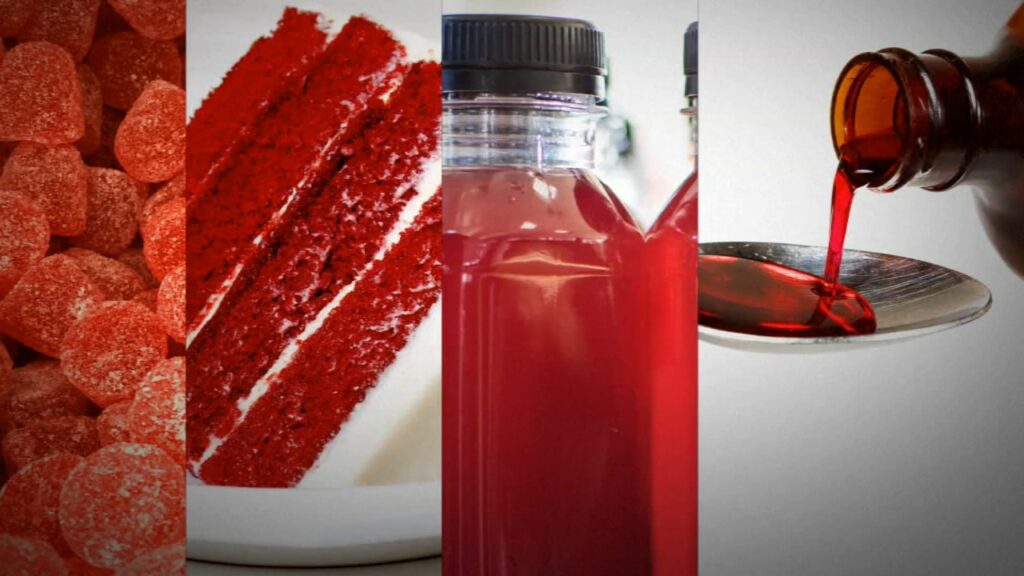
Headlines have been declaring Red 40 “banned” on and off for months now, and it’s worth being precise about what’s actually true, because the real situation is more mixed than that. Right now, in 2026, Red Dye 40 is not banned in the United States. What exists is a voluntary industry commitment, announced by HHS Secretary Robert F. Kennedy Jr. and then-FDA Commissioner Marty Makary, to phase out Red 40 and five other petroleum-based synthetic dyes by the end of 2027. No formal rule revoking its approval has actually been published.
Compare that to Red Dye 3, which the FDA did formally ban in January 2025, a binding rule with a reformulation deadline of January 15, 2027. Red 3 is banned. Red 40 is not, yet, it’s on a voluntary countdown that the industry agreed to but that isn’t legally enforced the same way.
The Two Additives Actually Under Formal Review
The more concrete regulatory action happening right now involves two less-famous additives: BHT (butylated hydroxytoluene), a preservative found in cereal, frozen meals, and chewing gum, and azodicarbonamide (ADA), a dough conditioner also used industrially to make yoga mats. The FDA has issued formal Requests for Information on both and opened public comment periods, one of which runs through August 31, 2026.

This is a genuinely different process than the Red 40 situation. A Request for Information is the FDA actually gathering data and public input to decide whether these substances need new safety limits or restrictions, not a company voluntarily agreeing to phase something out on its own marketing timeline. The American Bakers Association has already said the baking industry is on track to remove ADA voluntarily by the end of 2026, ahead of any formal FDA decision.
What’s Worth Actually Paying Attention To
The pattern worth noticing here isn’t any single ingredient, it’s the gap between “under review” and “banned,” a distinction that gets flattened in a lot of viral health content. Red 40, Yellow 5, potassium bromate, brominated vegetable oil, titanium dioxide, several of the additives common in American cereals, breads, and sodas are already restricted or banned in the EU, UK, Japan, or Canada, often over concerns tied to children’s health or thin, decades-old safety data that predates modern toxicology methods.
That gap between what’s allowed here and what’s allowed in other developed countries is real and worth knowing about regardless of where the U.S. review process lands. If you want to act on this before any formal ruling, the practical move is the same one it’s always been: check ingredient labels for the additives currently under scrutiny, rather than waiting for a ban that, for most of these, hasn’t actually happened yet.
What do you think? Does the voluntary industry approach actually work, or does real change only happen once something is formally banned? Let us know your thoughts in the comments on BeezLoop.com!
Related from BeezLoop: We Keep Calling Food Recalls 'Voluntary.' How Much Protection Does That Actually Give You?, Broccoli Sprouts Recalled After Salmonella Outbreak Sickens 22 in Four States and Salmonella and Snail's Pace: Why Corporate Supply Chains Beat the Bureaucracy.