

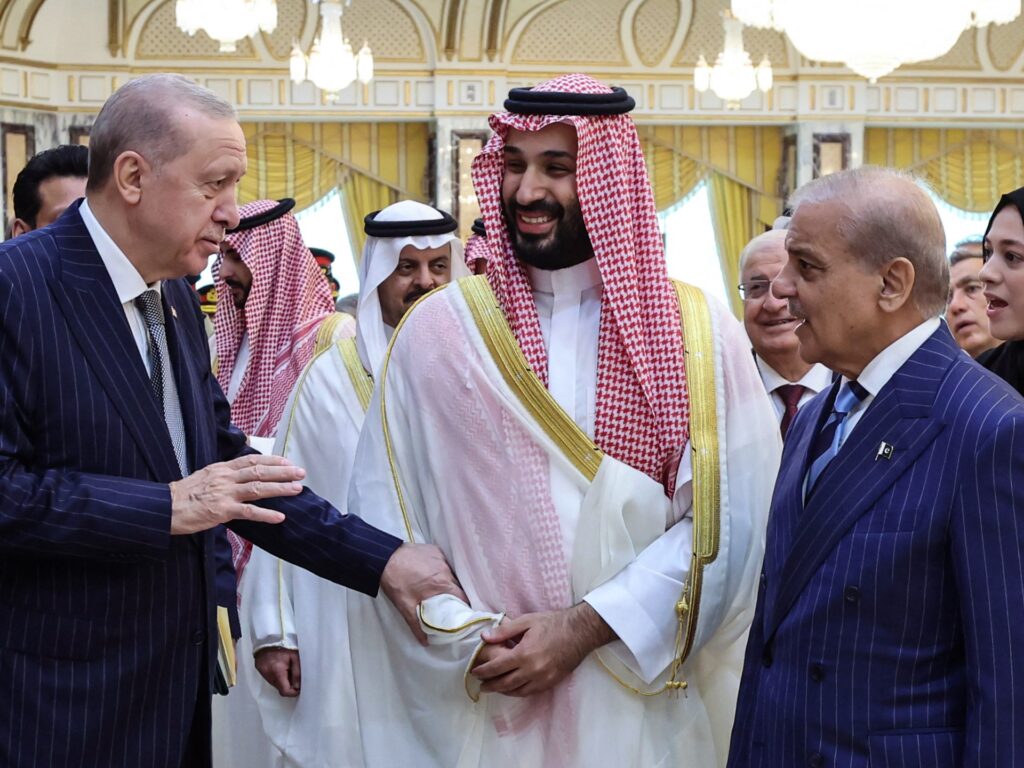
Saudi Arabia, Turkey and Pakistan have signed a defense agreement described in related coverage as a landmark pact involving mutual defense commitments. The agreement comes as conflict and wider instability intensify across the Middle East, prompting questions about whether the three countries are seeking a more coordinated role in regional security.
The arrangement could strengthen military and political ties among three influential Muslim-majority states with different strategic interests. Supporters may view closer cooperation as a way to improve deterrence, coordinate responses to crises and reduce reliance on outside powers. Its significance, however, will depend on how the commitments are interpreted and whether they lead to sustained cooperation beyond the initial agreement.
The pact has also raised questions about the future role of the United States in the Middle East. A stronger Saudi-Turkish-Pakistani security partnership could give regional governments greater leverage and encourage them to pursue more independent defense policies, while not necessarily replacing existing relationships with Washington or other powers.
Whether the agreement creates a new regional order remains uncertain. Its impact will depend on the countries’ ability to reconcile differing priorities, define the circumstances under which mutual defense would apply and respond to ongoing tensions involving Iran and other regional actors. For now, the pact signals a notable effort to reshape security cooperation amid a period of heightened turmoil.
Related Coverage
- Will Pakistan-Saudi-Turkiye alliance actually create a new regional order?
- Saudi Arabia, Turkey, Pakistan pledge mutual defence as Middle East turmoil escalates
- What could the Mecca defence pact mean for the US role in the Middle East?
- Saudi Arabia turns to Muslim military heavyweights in landmark defense pact as Iran war closes in
- Saudi Arabia, Turkey and Pakistan have signed a key defense agreement