
The Timing Question is a BeezLoop opinion series. We line up documented facts, lay out the theory they point to, and tell you what would prove it wrong. Facts are linked. The theory is ours.
Here’s the theory: President Trump’s talk of a pardon for Jensen Huang isn’t really about Huang. It’s about Nvidia, a company the U.S. government now earns money from, the president owns stock in, and Trump said this week he might want a piece of. When your government has a financial stake in a company, protecting its CEO starts to look like protecting an investment.
We can’t prove that. Nobody can yet. But every fact below is on the record, and you can judge how well they fit together.

What did Trump say about pardoning Jensen Huang?
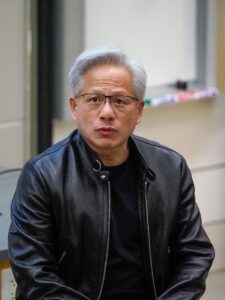
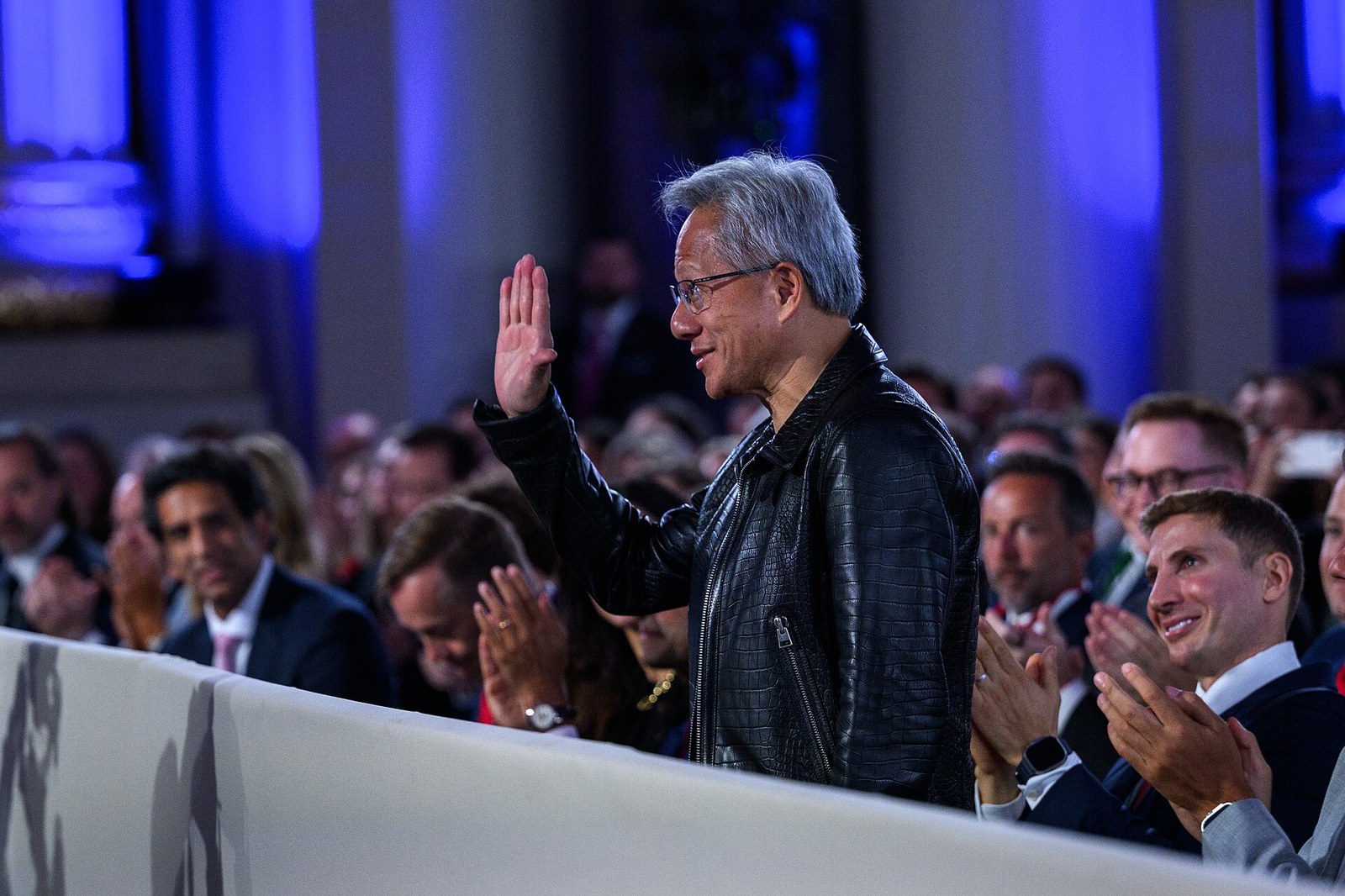
Trump told the New York Post that a pardon is “always an option, I guess, but I don’t think it’ll be necessary,” NBC News reported. He also said, “I don’t think he needs to take the Fifth.” Huang hasn’t been charged with anything. The Justice Department’s criminal probe targets Megaspeed, a Singapore company suspected of funneling Nvidia chips to China.
In the same interview, Trump said it’s “probably not too late” for the government to take a stake in Nvidia, the way it did with Intel in 2025, CNBC reported. A pardon and an ownership stake, floated in one conversation. That’s where the theory starts. We covered the mixed messages from Trump, Vance and Attorney General Todd Blanche earlier today.
How does the government make money from Nvidia?
Through China sales. In August 2025, Nvidia agreed to give the government 15% of its H20 chip sales in China, NPR reported. In January, Commerce wrote a rule letting Nvidia sell its stronger H200 chip to approved Chinese buyers, with the U.S. taking 25%. “We’re allowing them to do it, but the United States is getting 25% of the chips, in terms of the dollar value,” Trump said, per CNBC.
Nvidia reported about $2.4 billion in licensed China revenue last quarter, then said it has stopped shipping H200s to China. “Despite receiving some licenses, we have since stopped shipping H200s to China,” spokesperson John Rizzo told CNBC. So the money tap is off for now. The arrangement isn’t.

How much Nvidia stock does Trump own?
A lot, though the exact number is fuzzy. Trump’s federal disclosures show $13 million to $58 million in Nvidia stock at the end of 2025 and more than 100 Nvidia trades since January 2025, CBS News reported. The White House says his portfolio is “independently managed by third-party financial institutions.” Nvidia stock jumped after Huang got his job back.
And Trump says he helped make that happen. “I have been speaking to the board directly and indirectly,” he told CNBC, “and the board decided to do what we wanted to do.” Nvidia’s own SEC filing says the board “received input from senior levels of the United States government” before reinstating Huang.
What would prove this theory wrong?
- A clean, public answer from investigators. If the FBI and DOJ close out the Huang questions with a clear finding, the pardon talk becomes a throwaway line.
- Trump stepping back from the stock. Selling or freezing his Nvidia holdings would cut the most obvious conflict.
- Real answers on Capitol Hill. Huang sits for closed-door interviews with three House committees Dec. 1, and Senate Banking holds a public hearing on export controls Dec. 3.
- No stake talk. If the government ownership idea quietly dies, the “protect the investment” read gets weaker.
There’s an innocent version, too. Vice President JD Vance said this week, “I don’t think he needs a pardon at all” and “I haven’t seen any evidence again that he committed a crime,” ABC News reported. Maybe Trump just likes Huang and talks loosely. He does that.
The BeezLoop Take
We don’t think anyone traded a pardon for a chip deal, and we haven’t seen evidence of that. The problem is simpler. The government collects a cut of Nvidia’s China sales, the president holds its stock, pushed its board and now muses about owning part of it, and the same government is supposed to decide whether the company’s chips ended up where they shouldn’t. Sen. Elizabeth Warren raised the conflict last December, in a statement on the H200 decision. Nobody fixed it. Whatever happened with Huang, a regulator that profits from the company it regulates is going to keep getting asked this question.
If an investigation ever did point at Huang, would anyone in this administration have a reason to want it to go away?