
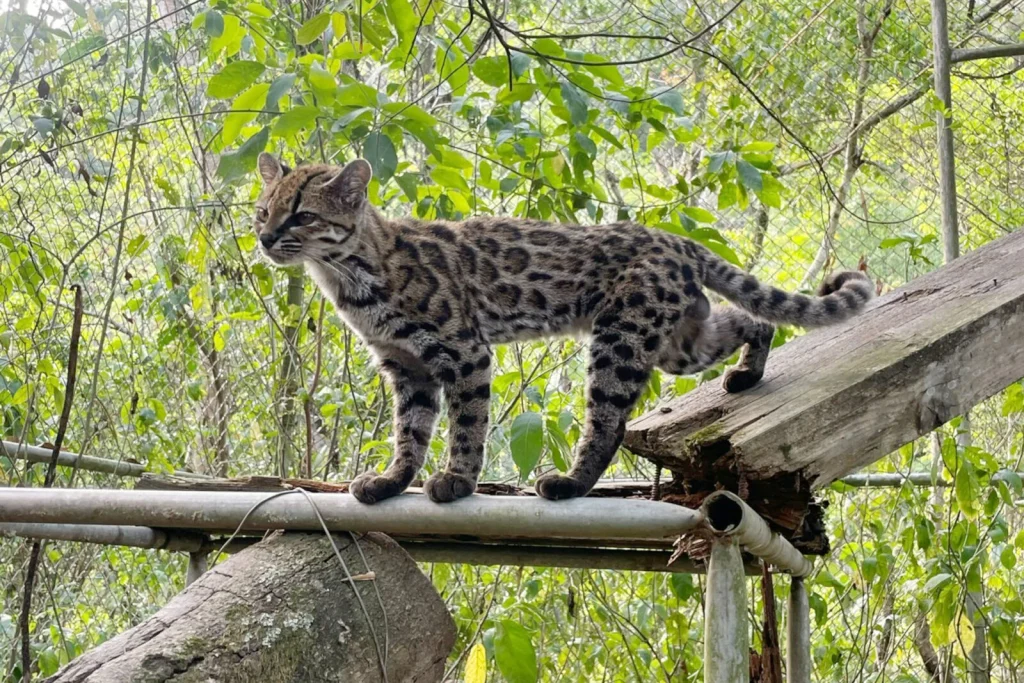
Scientists have formally described a new species of wild cat in Bolivia, the first newly named living cat species in more than a century. Leopardus tilcayo was published in Current Biology on September 17.
What the genetics actually showed
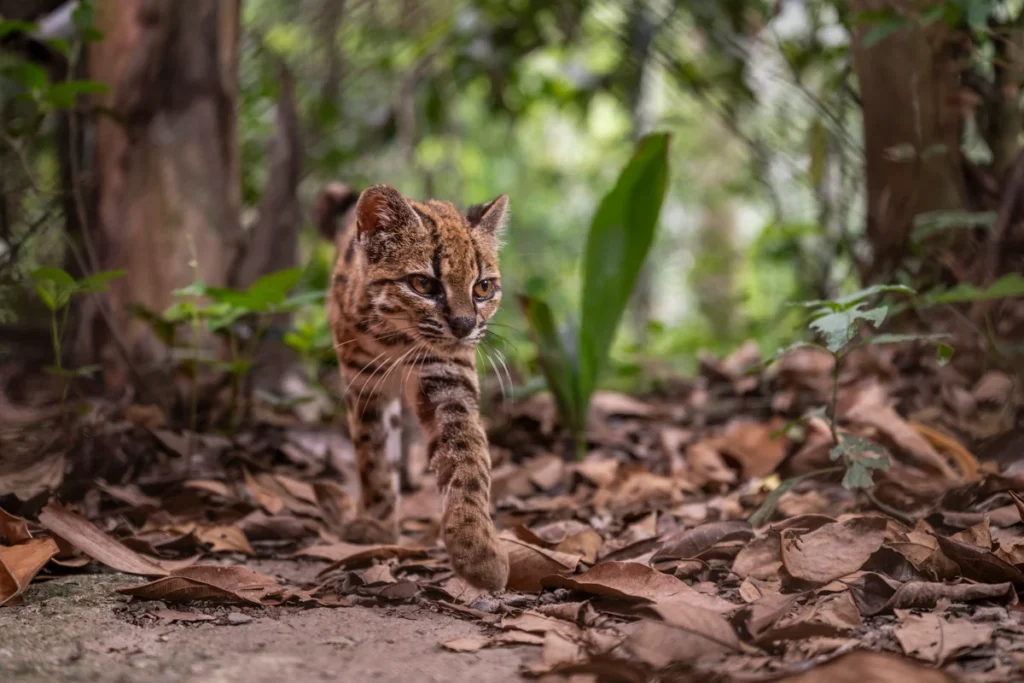
The cat lives in Bolivia’s Yungas cloud forest, on the eastern slope of the Andes where the mountains meet the Amazon basin. It is slender and spotted, with rounded ears and a light brown coat marked by dark rosettes, and it is smaller than a typical house cat. For years it was assumed to be a northern tiger cat, Leopardus tigrinus. Genetic analysis showed otherwise: its lineage diverged from other tiger cats roughly 1.4 million years ago.
The name came from the people who already knew it was there. “Tilcayo” is what local communities call the animal. The work also indicated that what science had treated as a small group of tiger cats actually contains several genetically distinct lineages.

The discovery began with a phone call in 2016 to biologist Paola Nogales-Ascarrunz, from a wildlife sanctuary that had been handed what staff described as a weird cat, found as a kitten on a road by a local family who kept it at home before turning it over.
How much do we actually know?
Almost nothing about the animal itself. Researchers have limited information on its behavior, reproduction, diet and population. Camera-trap evidence suggests it may be active at night. Scat suggests small rodents are part of what it eats. Those are fragments, not a picture.
Which raises the more interesting question: how much of the world do we assume we understand simply because we have already named most of the things that are easy to see?
We have satellites, genome sequencing, AI and cameras that watch remote forests around the clock. And a small mammal still lived in a hard-to-reach ecosystem, in a country with active biologists, long enough to be mistaken for something else.
Finding it is not the same as saving it
Discovering a species does not save it. The Yungas is under pressure from deforestation, agriculture and mining, and researchers have shared their findings with the International Union for Conservation of Nature for future assessment. Nobody can yet say how many of these cats exist, which is precisely the number conservation decisions require.
The open question
How many species, ecosystems and ecological relationships remain poorly understood, and how many could disappear before we learn enough to recognize what we lost?
What happens next
Watch for field observations, population estimates, and the IUCN’s assessment of the tiger-cat lineages. The most important part of this story comes after the discovery: whether the species survives the pressure on the forest it lives in.
There is a version of this problem that has nothing to do with forests. We are rapidly handing consequential decisions to systems whose behaviour their own builders cannot always explain, and the same humility applies: not understanding something is not the same as it being unimportant, and it is definitely not the same as it being safe.