

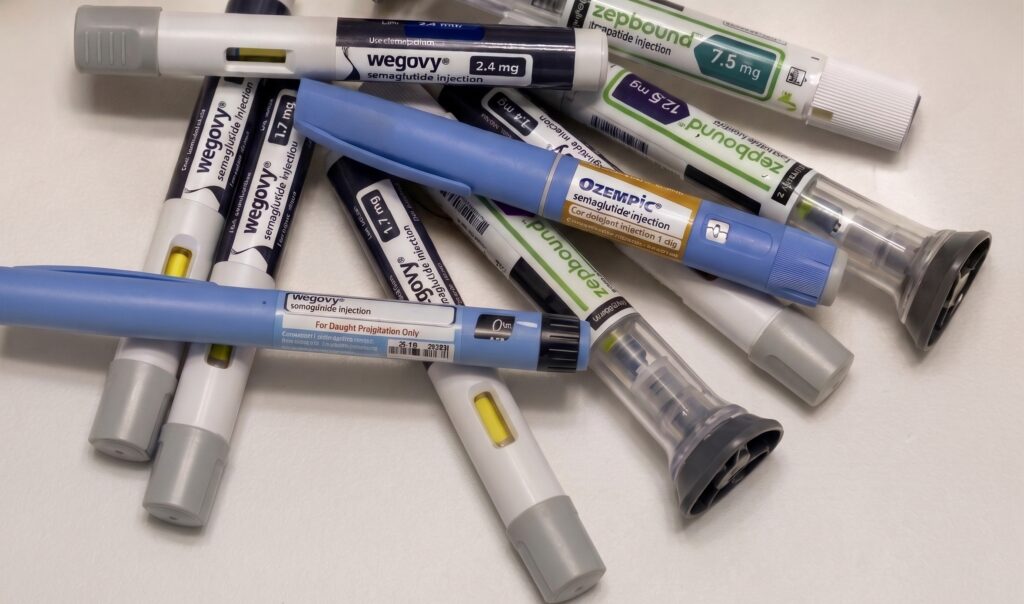
Cigna stopped covering GLP-1 drugs for weight loss in its own employee health plan on July 1. Starbucks ends its coverage in October. PepsiCo already cut it for employees using the drugs for weight loss alone. Across the country, the share of large employers covering GLP-1s for weight management dropped from 72% in 2025 to 60% in 2026, according to a Business Group on Health survey of 105 large employers conducted in February and March. Nearly 14% of employers have already eliminated the benefit or plan to by 2027, and pharmacy costs tied to these drugs now make up about a quarter of total employer health spending.
That single trend is landing very differently depending on who you are and how you get your health coverage. Here is what changes for each group.
If you take a GLP-1 for weight loss through a large employer plan
You are the group most exposed. Employers like Cigna and Starbucks are drawing a hard line between diabetes treatment and weight management, and weight management is what is getting cut. If your employer drops the benefit, list prices for Wegovy and Zepbound run roughly $1,000 to $1,350 a month. Manufacturer cash programs bring that down substantially, to about $349 a month for Wegovy after an initial discount period and $299 to $449 a month for Zepbound vials, but that is still a new recurring cost that was previously covered.
If you take a GLP-1 for type 2 diabetes
You are largely insulated from these specific cuts. PepsiCo’s letter to employees was explicit that diabetes coverage continues even as weight-loss coverage ends, and that pattern holds across most of the employers making changes. The distinction employers are drawing is diagnosis, not drug, so a diabetes prescription for the same medication family generally keeps its coverage.
If you’re on Medicare
You are getting a temporary, separate deal that has nothing to do with what employers are doing. The CMS Medicare GLP-1 Bridge, running July 1, 2026 through December 31, 2027, sets a flat $50 monthly copay for eligible Part D beneficiaries with obesity or an overweight-related condition, covering injectable Zepbound, Wegovy pens and pills, and other qualifying drugs. It bypasses standard Part D deductibles. But it is a demonstration program with an end date, not a permanent entitlement, and a planned five-year follow-on program was paused before it could launch in 2027.
If you’re on Medicaid
Coverage depends entirely on your state, and it is narrowing. As of January 2026, only 13 state Medicaid programs cover GLP-1s for obesity under fee-for-service. Pennsylvania, California, New Hampshire, and South Carolina have all eliminated that coverage in the past two years. If your state isn’t one of the 13, Medicaid will typically still cover the same drug for a type 2 diabetes diagnosis.
If you live in a state with a coverage mandate
You have more protection than most. North Dakota became the first state to require individual and group health plans to cover GLP-1 and GIP medications, starting in January 2025. California’s AB 575 now directs plans to cover at least one anti-obesity medication. Connecticut passed separate mandates covering state employees and other qualifying residents. If you live in one of these states, an employer generally can’t strip the benefit the way Cigna or Starbucks did for their own workforces, because state law sets the floor.
If you work for a small business
You were probably never covered in the first place. The employers making headlines for cutting GLP-1 benefits are large, self-insured companies that added the coverage in the last few years as demand surged. Small businesses, which typically buy fully-insured plans instead of self-insuring, have much lower GLP-1 coverage rates to begin with, so this wave of cuts mostly is not reaching you because the benefit was rarely there.
The through-line across every group is the same: coverage now depends heavily on diagnosis code, employer size, state of residence, and whether you’re on Medicare, Medicaid, or a private plan, more than it depends on what a doctor actually prescribes.
Sources: Business Group on Health · CMS Medicare GLP-1 Bridge · Pharmacy Times · KFF · ABC News