


Tens of thousands of people marched across Spain on Wednesday to demand the government fix the humanitarian crisis unfolding in Ceuta, the Spanish enclave on Morocco’s coast where thousands of migrants remain stranded more than a month after a mass border crossing overwhelmed local authorities. Organizers say roughly 50,000 protesters filled the streets of Madrid alone, with demonstrations also held in more than 200 other cities and towns across the country.
The protests were organized by the nonpartisan Spanish Federation of Municipalities and Provinces, not a political party, reflecting frustration that has spread well beyond the usual partisan lines. Marchers directed much of their anger at Prime Minister Pedro Sánchez, blaming his government for what they see as a slow and inadequate response in the month since the crisis began.
What happened in Ceuta
In late July, an estimated 72,000 people attempted to swim, scramble over fencing, or otherwise force their way into Ceuta from Morocco, in one of the largest single mass-crossing attempts the enclave has ever recorded. At least 90 people died in the attempt, according to reporting at the time. Spanish authorities managed to return most of the arrivals or send them back over the border in the immediate aftermath, but roughly 5,000 people, including an estimated 1,200 minors, remain in Ceuta more than a month later, straining local shelters, emergency services, and a city government not built to handle a population surge of that size.

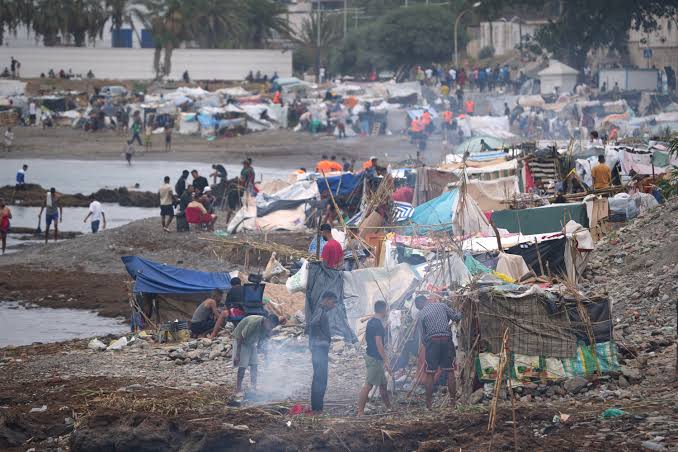
Tensions boiling over
Wednesday’s demonstrations were largely peaceful during the day, but reports indicate violence broke out in parts of the country after the main marches ended, with gunshots and explosions heard for hours into the night in some areas. Spanish officials have not yet detailed the full extent of that overnight unrest or announced arrests connected to it.
The crisis has also spilled into Spain’s relations with its European neighbors, with Madrid moving to impose new border controls tied to the fallout from Ceuta. For residents of the enclave itself, the more immediate concern remains the thousands of people still living in makeshift conditions a month after they arrived, and a national government now facing organized public pressure, not just from migration hardliners, but from a broad cross-section of Spanish society demanding a plan.
Related from BeezLoop: Airbus Backs Down on Its Return-to-Office Mandate After Union Strikes, Border Security Money Is Paying for Trump’s Ads and The Supreme Court Let the Voter Purge Database Run.