

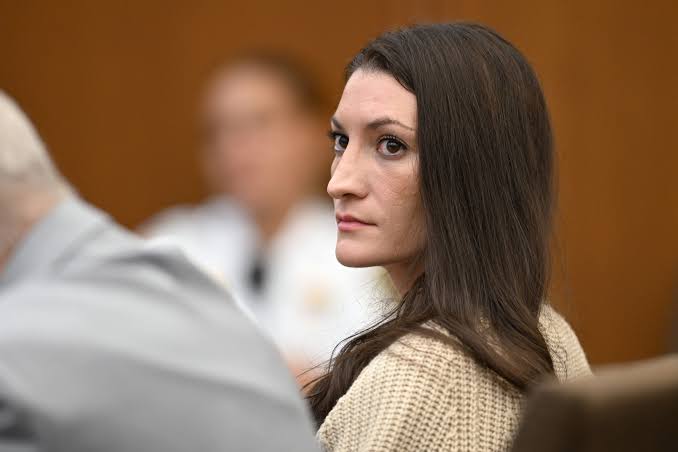
The defense rested Friday in the murder trial of Lindsay Clancy, the Duxbury, Massachusetts mother charged with killing her three young children in 2023. Clancy’s attorney does not dispute that she caused their deaths, but argues she should not be held criminally responsible because she was in the grip of postpartum psychosis at the time and could not understand right from wrong.
Clancy, now 36, has pleaded not guilty to murder in the deaths of Callan, Dawson, and Cora Clancy, who ranged from 8 months to 5 years old. Her defense called ten witnesses, including her mother and sister, who described a rapid mental health collapse in the weeks before the killings, along with a clinical and forensic psychologist who evaluated her in February 2023 and testified he believed she was experiencing psychosis and unable to distinguish right from wrong at the time.
What Is Postpartum Psychosis, and Why Is It So Hard to Diagnose in Time?
Postpartum psychosis is a rare but severe mental illness linked to the sleep deprivation, hormonal shifts, and acute stress that can follow childbirth, and it is distinct from the far more common postpartum depression. It can produce delusions and a break from reality severe enough that a parent loses the ability to accurately perceive their own actions, which is the core of the defense’s argument in Clancy’s case. Coverage of the trial has repeatedly noted how few doctors are trained to recognize it early, and how thin the safety net is for mothers who do raise the alarm about a rapid mental decline.

Prosecutors, who maintain the killings were planned and deliberate, have now begun calling rebuttal witnesses, with closing arguments expected in the trial’s final days. Whatever the jury ultimately decides about Clancy’s criminal responsibility, the case has already put a rare and severe illness in front of a much wider audience than it usually gets, and renewed a public conversation about how much support new mothers showing serious warning signs are actually able to get before a crisis becomes irreversible. Full trial coverage is available from Courthouse News Service.
Update: Jury Deadlocked, Ordered to Keep Deliberating
Jurors told the judge Tuesday they were deadlocked after four days of deliberations without reaching a unanimous verdict on whether Clancy should be held criminally responsible for killing her three children. The judge instructed them to keep deliberating and return Wednesday for a fifth day. Under Massachusetts law, the judge can send jurors back to deliberate up to twice more before declaring a mistrial if they remain unable to agree.
Update: Jury Still Deadlocked Entering Seventh Day, Judge Declines to Remove Holdout Juror
As of Friday, September 4, the jury has now deliberated roughly 36.5 hours over more than six days without reaching a unanimous verdict, entering a seventh day of deliberations, according to the Boston Globe and NBC News.
The jury foreperson sent the judge a note saying one juror will not follow the court’s instructions on reasonable doubt. Defense attorney Kevin Reddington said the panel is split 11-1 in his client’s favor and asked the judge to remove the holdout juror. The judge denied that request after questioning each juror individually about their ability to keep deliberating, according to CNN’s live coverage. If convicted, Clancy could face life without parole; if found not criminally responsible due to mental illness, she would be committed to a state mental health facility rather than prison.
Judge Sullivan Declares a Mistrial
Judge William Sullivan declared a mistrial in Lindsay Clancy’s murder case Friday, September 4, after the jury remained deadlocked and told him for a final time that they could not reach a unanimous verdict. The panel had deliberated across seven days, roughly 36.5 hours total, and stayed split 11-1 in Clancy’s favor according to her defense attorney, with a single holdout juror the foreperson said would not follow the court’s instructions on reasonable doubt.
The mistrial came just after the Massachusetts Supreme Judicial Court rejected an emergency appeal from defense attorney Kevin Reddington, who had asked the state’s highest court to intervene and either question or remove the holdout juror rather than let the deadlock stand. With that appeal denied, Sullivan told the courtroom he had no remaining option but to declare a mistrial, according to NPR and NBC News.
Throughout the trial, Reddington argued Clancy was a loving mother in the grip of a severe postpartum psychotic episode when she killed her three children — Cora, 5, Dawson, 3, and 8-month-old Callan — and should be found not criminally responsible by reason of insanity. Prosecutors rejected that defense and pushed for a murder conviction. A mistrial leaves that question unresolved: Clancy has not been acquitted or convicted, and prosecutors will now have to decide whether to retry the case in front of a new jury or pursue another path, such as renewed plea negotiations.
Update: DA Says a Retrial Decision Is Coming, but Not Yet
Plymouth County District Attorney Timothy Cruz said his office will decide whether to retry Lindsay Clancy “soon,” but not immediately. Cruz defended the original first-degree murder charges as “warranted” and “appropriate,” and framed the decision around the three children Clancy is accused of killing: “In the end, I bring it back to the child victims in this case: Cora, Dawson and Callan. We’re here at the courthouse today, because those children are not… Children were murdered, and it is our job to seek justice.”
The case returns to court on September 29, 2026, for a reconsideration hearing, at which point Cruz’s office is expected to indicate whether it will retry Clancy on the three murder counts or pursue lesser charges instead. No retrial has been announced or decided as of this writing; Cruz’s comments reflect an intent to make that call by the September 29 hearing, not a final decision.
Sources: The Boston Globe · WBUR
Related from BeezLoop: Looksmaxxing's Biggest Streamer Is Charged With Rape, Fox News & Conservative Media Made The Black Clancy Holdout Juror a Hero in Two Days and Two Teens Arrested in Separate School Shooting Threat Cases in Kentucky and Massachusetts.