

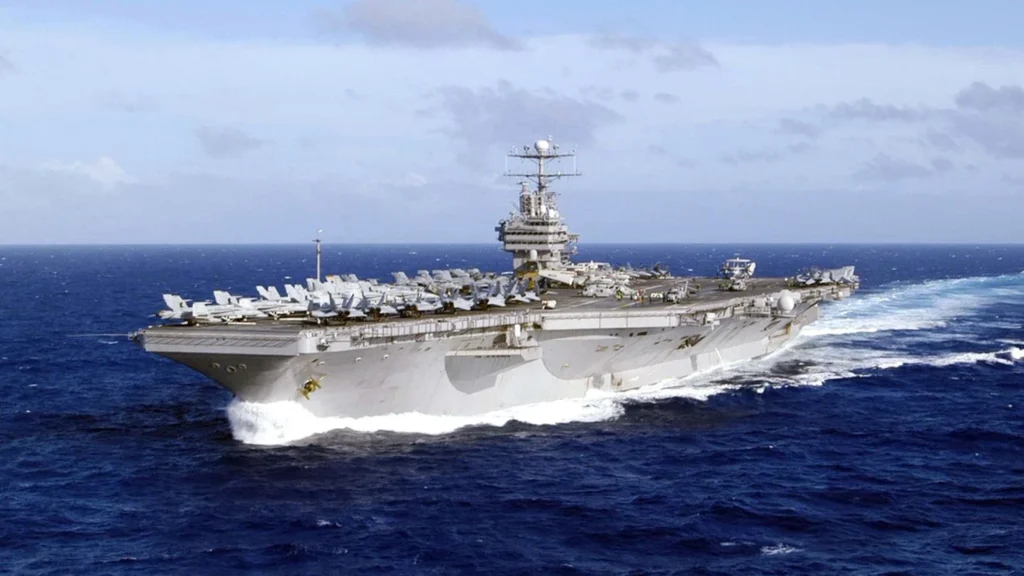
The USS Abraham Lincoln has now spent more than 260 days at sea, the longest unbroken deployment of a US Navy carrier on record, including roughly 40 days of sustained combat operations during the war with Iran. As a relief carrier strike group finally arrives to take over in the Persian Gulf, reporting from Navy Times and accounts from sailors’ families describe a crew pushed to a breaking point, including at least one confirmed incident in which a sailor jumped from the flight deck and was recovered by a search-and-rescue helicopter, plus additional attempts described by family members and, according to some reporting, documented separately.
Democratic Senators Richard Blumenthal and Ruben Gallego have publicly pressed the Navy and Defense Secretary Pete Hegseth for answers about conditions on board. Rep. Mike Levin has described specific complaints relayed to his office, including moldy showers, broken toilets, laundry facilities down for weeks at a stretch, long periods without hot water, and meals reduced to rations like half a cup of rice with two tortillas. US Central Command has pushed back on parts of the narrative, taking the unusual step of publicly disputing what it called “specific online rumors,” and a Navy spokesperson stated that, based on information available to the command, it has “not identified an increase in reported suicidal ideation or suicide attempts aboard the ship.” Adm. Brad Cooper, the CENTCOM commander, made a visit to the carrier over the weekend.
Two Accounts That Don’t Fully Reconcile
What’s notable here isn’t just the alleged conditions, it’s the gap between what families are describing and what the Navy is willing to confirm on the record. Both things can be true in different ways: a large-scale military deployment stretched to a historic length under real combat stress is going to produce real psychological strain, and an official denial of a “documented increase” in suicide attempts isn’t necessarily a denial that individual, serious incidents happened. The Navy’s statement is narrowly worded around what’s been formally reported through its own channels, not a blanket claim that nothing occurred.

An earlier report examined allegations that a US logistics hub in Bahrain was damaged by an Iranian strike, an allegation the Pentagon has not confirmed, which some families and lawmakers have pointed to as a contributing factor in why resupply and rotation for the Lincoln has taken this long. That link remains unconfirmed. What is confirmed is the deployment length itself, and that a serving sailor went overboard in an apparent crisis and had to be pulled from open water.
What Accountability Looks Like From Here
A 260-day deployment with 40 days of active combat is an extraordinary ask of any crew, and extraordinary asks require extraordinary support systems, not just extraordinary endurance. Whether the Navy’s on-board mental health, chaplaincy, and medical resources were actually adequate to that ask is a question that congressional oversight, not a press statement, is better positioned to answer. The families pushing for that oversight aren’t the ones who owe anyone an explanation here.
If you or someone you know is struggling, the 988 Suicide and Crisis Lifeline is available 24/7 by call or text at 988, and the Veterans Crisis Line can be reached at 988 then press 1.
What do you think? Should Congress set a hard cap on deployment length regardless of operational demands, or does that tie the military’s hands in an active conflict? Let us know your thoughts in the comments on BeezLoop.com!
Related from BeezLoop: USS Abraham Lincoln Supply Crisis Traces to Iranian Strike on Bahrain Base, Trump on the USS Lincoln's Nine-Month Deployment: "Not Nearly Long Enough" and The 250-Day Trap: Why Navy Sailors Are Jumping Off the USS Abraham Lincoln.