The idea that social media is causing a teen mental health crisis has become close to settled fact in public conversation, driving a wave of state laws and even a national ban on under-16 social media use in Australia. The actual research behind that claim is a lot messier than the policy debate suggests, and a growing number of scientists are saying so out loud.
A specification curve analysis of roughly 3,000 Irish teenagers, one of the more methodologically careful recent studies, found that 64% of model specifications linked more social media time to poorer wellbeing. That sounds like confirmation until you look at the actual size of the effect: it was small, and consistently weaker than other, more established predictors like school safety and family support. In plain terms, whether a teenager feels safe at school and supported at home moved the needle more than how much time they spent on their phone.
Why the Evidence Keeps Coming Back “Mixed”
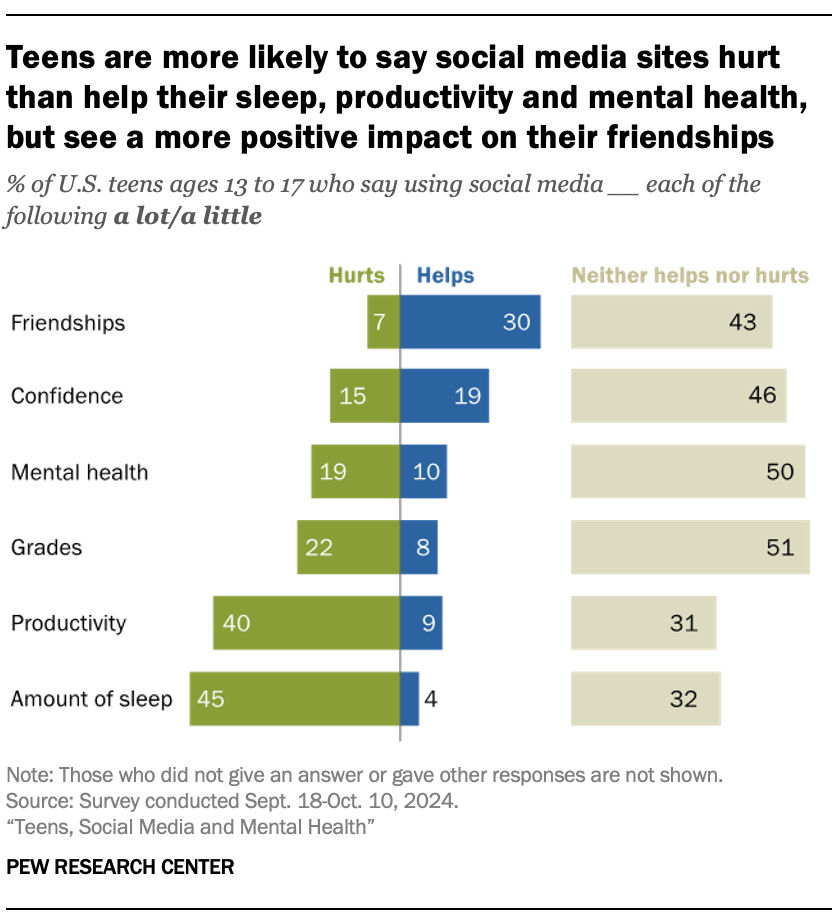
This isn’t one contrarian study standing against a wall of consensus. Developmental psychologists at UC Irvine, Brown University, and elsewhere have repeatedly found the evidence base is, in their words, mixed, blurry, and often contradictory. Long-running studies that track tens of thousands of teenagers over years have produced a real spread of results: some find no measurable effect, some find small negative effects, and some even find small positive ones, depending on the platform, the population, and how “use” gets measured.

A separate 100-day study looking specifically at different platforms found genuinely diverse effects depending on which app teens were using and how, which cuts against the idea of “social media” as one uniform thing with one uniform impact. TikTok, group chats with close friends, and passive scrolling through influencer content aren’t the same activity wearing different skins, and treating them as interchangeable is part of why the research keeps landing in different places.
What Gets Lost When the Science Gets Skipped
None of this means social media is harmless, and it’s not an argument against parents paying attention to how their kids use it. It’s a narrower, more useful point: researchers pushing back on rushed bans aren’t saying “everything’s fine,” they’re saying that a lot of proposed legislation treats correlational, inconsistent findings as if they were as solid as, say, the evidence linking smoking to lung cancer, and that gap matters because it shapes what policies actually get tried.
Some of the researchers raising this concern point to a specific risk: framing this as a settled “public health crisis” caused by one clear villain can crowd out attention to factors the data actually does support more consistently, things like school safety, family support, and broader economic and social stress on teenagers. If the goal is genuinely helping teens, not just being seen taking action, the distinction between “settled science” and “an association researchers are still arguing about” is exactly the kind of thing worth getting right before writing it into law.
What do you think? Should lawmakers wait for stronger evidence before regulating teen social media use, or is some action better than waiting for research that may never fully settle? Let us know your thoughts in the comments on BeezLoop.com!
Related from BeezLoop: How Social Media Algorithms Feed Political Vigilantism, Exploiting Development: Inside the Federal Trial Over Meta’s Youth Harm Algorithms and How Social Media Tech Giants Built a Weeks-Long Radicalization Machine.